Mon Sep 28 2026
How to Winterize Your Motorcycle: A Simple Step-by-Step Guide
Learn how to winterize your motorcycle with simple steps for fuel, battery, oil, tires, coolant, cleaning, and storage so it’s ready to ride in spring.
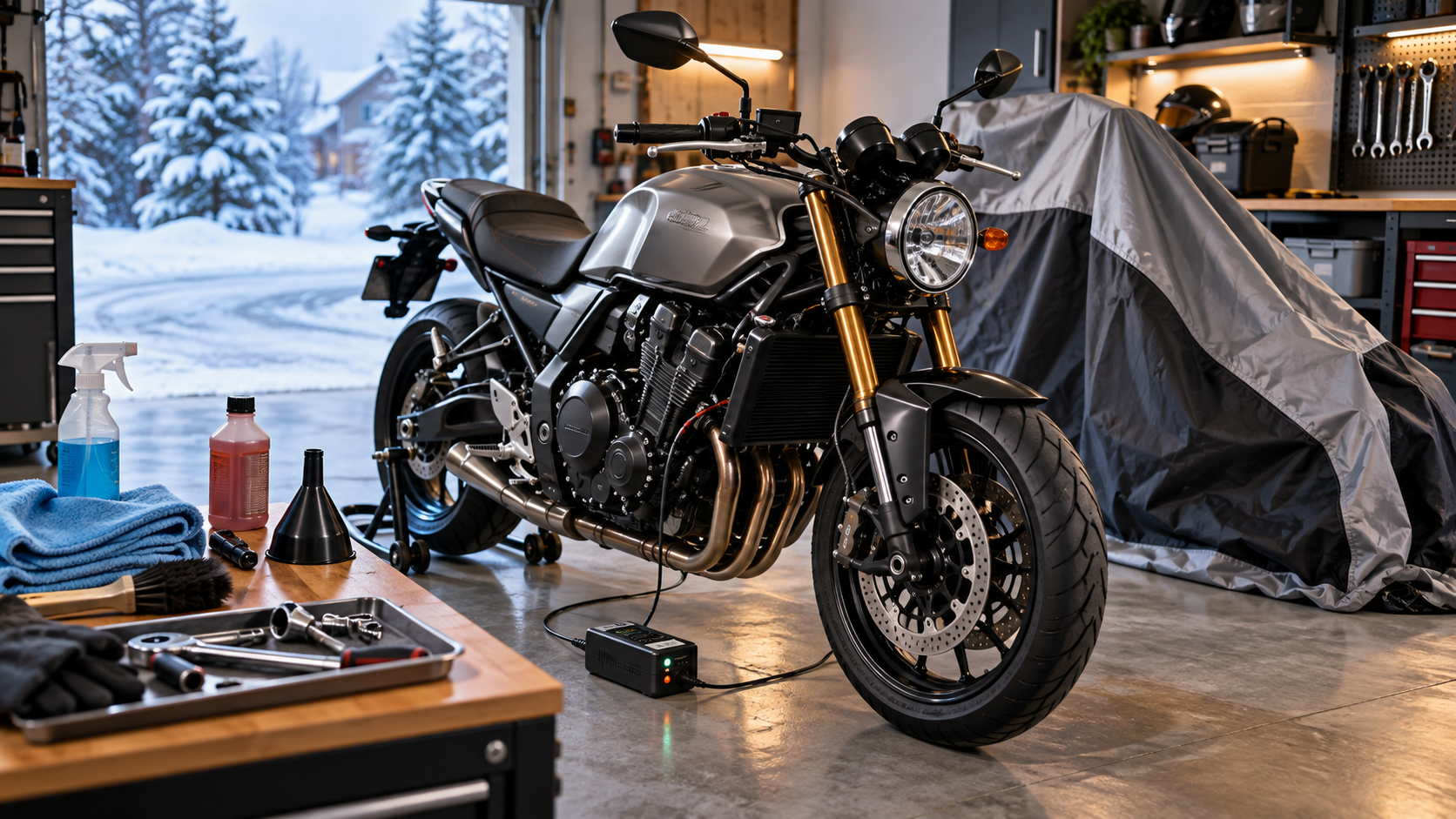
Season's over now what ?
When the temperatures start dropping and riding season comes to an end, it can be tempting to roll your motorcycle into the garage, throw a cover over it, and forget about it until spring.
Don’t.
A little work before winter can save you from a dead battery, stale fuel, corrosion, flat-spotted tires, and an expensive first ride of the season.
The good news? Winterizing a motorcycle really isn’t that complicated. Give yourself an hour or two in the garage and you can put your bike away knowing it’ll be ready when the warm weather comes back.
Here’s how we do it.
1. Fill the Gas Tank
Before putting the bike away, fill the fuel tank.
A mostly empty metal tank leaves room for moisture and condensation to develop inside. Keeping the tank full reduces the amount of exposed air space and helps protect the inside of the tank.
But don’t stop at simply filling it.
2. Add Fuel Stabilizer
Gasoline doesn’t stay fresh forever.
If your motorcycle is going to sit for several months, add a quality fuel stabilizer according to the directions on the bottle.
After adding it, run the motorcycle for several minutes. You want the treated fuel to circulate through the fuel system—not just sit in the tank.
For carbureted motorcycles, storage procedures can vary depending on the bike. Some owners drain the carburetor bowls, while others store the motorcycle with stabilized fuel in the system. Your owner's manual should be the final word for your particular machine.
3. Change the Oil and Filter
If your oil is near the end of its service interval, change it before storage rather than waiting until spring.
Used engine oil contains contaminants and combustion byproducts that you generally don't want sitting in the engine for months.
Put the bike away with clean oil and a fresh filter, and that's one less maintenance job waiting for you when riding season returns.
4. Take Care of the Battery
This is probably the winter storage mistake riders make most often.
Modern motorcycles can have small electrical draws even when they're turned off. Leave the bike sitting for several months and you may discover a completely dead battery in the spring.
A motorcycle battery maintainer is one of the best investments you can make.
A smart maintainer monitors the battery and supplies charge when necessary rather than continuously pumping power into it.
If your motorcycle is stored somewhere without electrical power, consider removing the battery and keeping it in an appropriate location where you can periodically monitor and charge it.
5. Check Your Coolant
If your motorcycle is liquid cooled, check the coolant before winter.
Make sure:
- The coolant level is correct.
- There aren't any obvious leaks.
- The coolant is suitable for the temperatures where the motorcycle will be stored.
- The coolant isn't overdue for replacement.
Don't assume every liquid in a motorcycle's cooling system automatically provides adequate freeze protection. Know what's actually in your bike.
6. Clean the Motorcycle
We know. You were hoping to skip this one.
But putting a dirty motorcycle into storage means bugs, road grime, brake dust, salt, grease, and other contaminants get to spend several months sitting on the bike.
Give it a proper wash and dry it thoroughly.
Pay particular attention to chrome, painted surfaces, exposed metal, wheels, and anywhere road grime tends to accumulate.
A coat of wax or appropriate protectant on painted and metal surfaces can provide another layer of protection during storage.
Just keep slick detailing products away from your brake rotors, brake pads, tire tread, seats, grips, and controls.
7. Clean and Lubricate the Chain
If your motorcycle uses a chain, winter storage is a great time to give it some attention.
Clean the chain using products appropriate for your chain type, inspect it for excessive wear or damaged links, and lubricate it according to the manufacturer's recommendations.
Also check the chain tension.
A clean, properly lubricated chain sitting in the garage all winter is a lot better than storing one covered in months of road grime.
8. Check the Tires
Inflate the tires to the manufacturer's recommended pressure before storage.
Tires naturally lose pressure over time, especially as temperatures change.
Check them periodically during the winter if possible.
If you have motorcycle stands and your motorcycle manufacturer permits their use for long-term storage, getting some or all of the weight off the tires can be helpful. Otherwise, occasionally repositioning the motorcycle can prevent it from sitting on exactly the same section of tire for months.
And while you're down there, inspect the tires for cracks, damage, unusual wear, and remaining tread.
Spring is a terrible time to discover that the tires you planned on riding another season should have been replaced.
9. Protect the Exhaust
If your motorcycle is being stored somewhere mice or other small animals can reach it, the exhaust can become an inviting winter home.
There are several commercially available exhaust plugs designed specifically for storage.
If you plug the exhaust, though, make it impossible to forget.
Attach a bright tag to the handlebars or ignition saying:
REMOVE EXHAUST PLUG BEFORE STARTING
You do not want to rediscover it when you hit the starter in April.
10. Don't Start the Bike for Five Minutes Every Couple of Weeks
This one gets repeated constantly.
"I'll just start it every few weeks during the winter."
Unless you're actually going to operate the motorcycle long enough to fully bring the engine and other components up to normal operating temperature, you're generally better off properly preparing it for storage and leaving it alone.
Repeated short starts can introduce moisture without giving the motorcycle enough operating time to fully warm up.
Winterize it correctly.
Then let it sleep.
11. Use a Motorcycle Cover
Even inside a garage, a breathable motorcycle cover helps keep dust and dirt off the bike.
The important word here is breathable.
You don't want to trap moisture underneath a plastic tarp for the entire winter.
If you're storing the motorcycle outside, things become much more complicated. You'll need serious weather protection while still managing moisture and ventilation.
Whenever possible, indoor storage is the better option.
12. Give the Bike One Last Inspection
Before you walk away for the winter, spend a few minutes looking over the motorcycle.
Check for:
- Oil leaks
- Coolant leaks
- Loose hardware
- Damaged cables
- Worn brake pads
- Low brake fluid
- Cracked hoses
- Tire damage
- Chain wear
- Anything you've been saying you'll "get to eventually"
Write down anything that needs attention.
Winter is a great time to order parts and handle maintenance without sacrificing a weekend of riding.
Your Winter Motorcycle Storage Checklist
Before calling it finished:
- Fill the fuel tank.
- Add fuel stabilizer.
- Run the engine long enough to circulate treated fuel.
- Change the oil and filter if needed.
- Connect a battery maintainer.
- Check coolant and freeze protection.
- Wash and completely dry the motorcycle.
- Protect painted and exposed metal surfaces.
- Clean and lubricate the chain.
- Inflate and inspect the tires.
- Protect the exhaust from pests if necessary.
- Cover the motorcycle with a breathable cover.
- Make a list of repairs or maintenance needed before spring.
And, as always, check your motorcycle's owner's manual for model-specific storage instructions.
One Afternoon Now Makes Spring A Lot Better
Winterizing isn't the most exciting part of owning a motorcycle.
Neither is discovering a dead battery and a bike that won't start on the first 70-degree Saturday of the year.
Spend a little time taking care of the motorcycle before winter and spring becomes much simpler: uncover it, perform your pre-ride inspection, take care of anything required by the manufacturer after storage, and get back on the road.
Because the entire point of putting the bike away properly is making sure it's ready when you are.
Torque & Horse Garage
Ride it. Wrench it. Repeat.